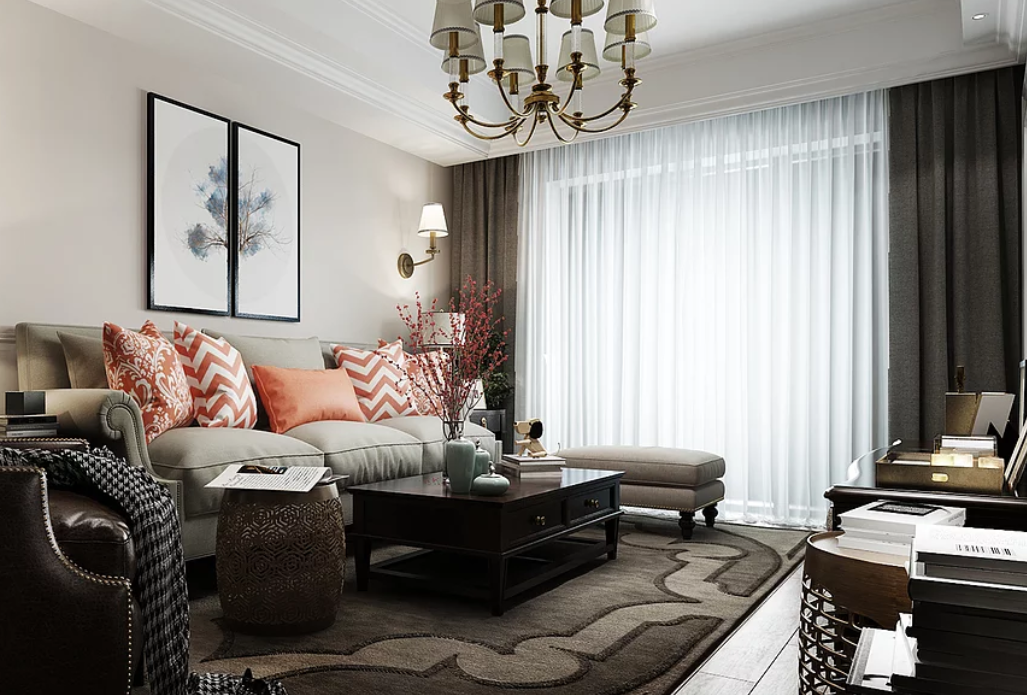
From Cold White to Warm Minimalism
Between roughly 2015 and 2020, the dominant interior palette in Singapore condo renovations was what designers sometimes called "cold minimalism" — white walls, grey floors, polished chrome fixtures, and furniture in black or dark walnut. The look was sharp but unforgiving in tropical light, and it aged quickly. By 2022, a noticeable shift had taken place toward warmer, softer interpretations of the same minimalist brief.
The warm minimalism now prevalent in new renovations uses off-white and beige walls rather than pure white, matte rather than gloss surfaces, and warm-toned timber or terrazzo floors instead of cool grey stone. Furniture tends toward rounded forms and natural fabrics — boucle, linen, rattan — rather than the angular, synthetic-upholstered pieces that defined the earlier period.
This shift is partly aesthetic evolution and partly practical. Pure white walls in Singapore's humid climate require frequent repainting — staining occurs faster than in temperate climates — and off-white formulations such as Dulux Antique White or Nippon Moment disguise this better. The move is as much maintenance-driven as it is trend-driven.
The Japandi Influence in Compact Spaces
Japandi — a hybrid of Japanese and Scandinavian design principles — has been the most consistently cited aesthetic reference among Singapore interior designers since around 2021. Its appeal in the local condo context is structural: it performs well in small, high-ceiling-deficient spaces because it prioritises visual lightness, low furniture profiles, and deliberate negative space.
In a typical 700 sqft two-bedroom Singapore condo, Japandi principles manifest as: a single low sofa rather than an L-shaped sectional, floor-level storage rather than wall-mounted shelving, sliding panels rather than hinged doors where possible, and a restrained accessory count. The result reads as considered rather than sparse, which matters in a residential market where buyers frequently view furnished units.
Japanese material references — washi paper pendant lights, cerused oak cabinetry, sand-textured wall panels — have been adopted selectively. Scandinavian references lean toward functional hardware, flat-pack storage architecture, and the restrained use of primary colour in accent pieces.
Japandi works in Singapore because it never competes with the view or the light. It steps back and lets the unit breathe — which is what every compact condo needs most.
Wabi-Sabi: Selective Adoption
Wabi-sabi — the Japanese aesthetic that finds beauty in imperfection and incompleteness — entered Singapore's condo design vocabulary around 2022 but has been adopted selectively rather than wholesale. Full wabi-sabi interiors, with their unfinished edges, patinated metals, and intentionally asymmetric arrangements, read as incomplete to many buyers in Singapore's resale market, where units are typically assessed against clean, resolved presentations.
What has been adopted from wabi-sabi is the acceptance of visible texture. Micro-cement walls with natural variation, handmade ceramic tile patterns with dimensional inconsistency, and rough-sawn timber accents have all become common in renovations that are otherwise conventionally finished. The philosophy is applied as a texture choice rather than a comprehensive design framework.
What Drives Trend Adoption in Singapore Condos
Several factors shape how quickly design trends move through Singapore's condo market:
- The active resale market creates strong incentive to renovate in alignment with prevailing buyer taste rather than purely personal preference
- Instagram and Pinterest have accelerated the circulation of reference images among both residents and contractors, compressing the time between trend emergence and widespread adoption
- Singapore's IDs (interior designers) tend to operate in clusters of similar aesthetic direction — choosing an ID often means choosing a style cohort
- Material suppliers lead trend adoption: when a Singapore distributor begins stocking a new tile format or timber finish, it rapidly appears across multiple projects handled by their contractor clients
Which Trends Age Well in Singapore
Not all minimalist trends wear equally well in a tropical context. Several observations from renovations completed between 2018 and 2022 that have now been lived in for three or more years:
Warm-toned engineered timber floors have held up better aesthetically than grey-toned equivalents, which have dated faster and show marks more visibly. Matte wall paint in off-white or warm beige requires less frequent touch-up than high-gloss whites. Fluted glass cabinet doors — a signature of 2020–2022 minimalism — remain in good condition and have not dated as quickly as initially predicted by sceptics.
Boucle upholstery, widely adopted from 2022, is showing wear faster than expected in households with pets or children and is beginning to be replaced by more durable performance fabrics in the same cream and off-white range. This pattern is consistent with boucle's trajectory in other markets.
Further Reading
BCA's renovation guidelines for private residential properties are available at bca.gov.sg. For trend context from a practitioner perspective, the Institute of Interior Designers Singapore publishes member work at iids.org.sg.